Third Friends of CFC Luncheon Hosted by the Embassy of Bangladesh: advancing CFC 2.0 through stronger partnerships
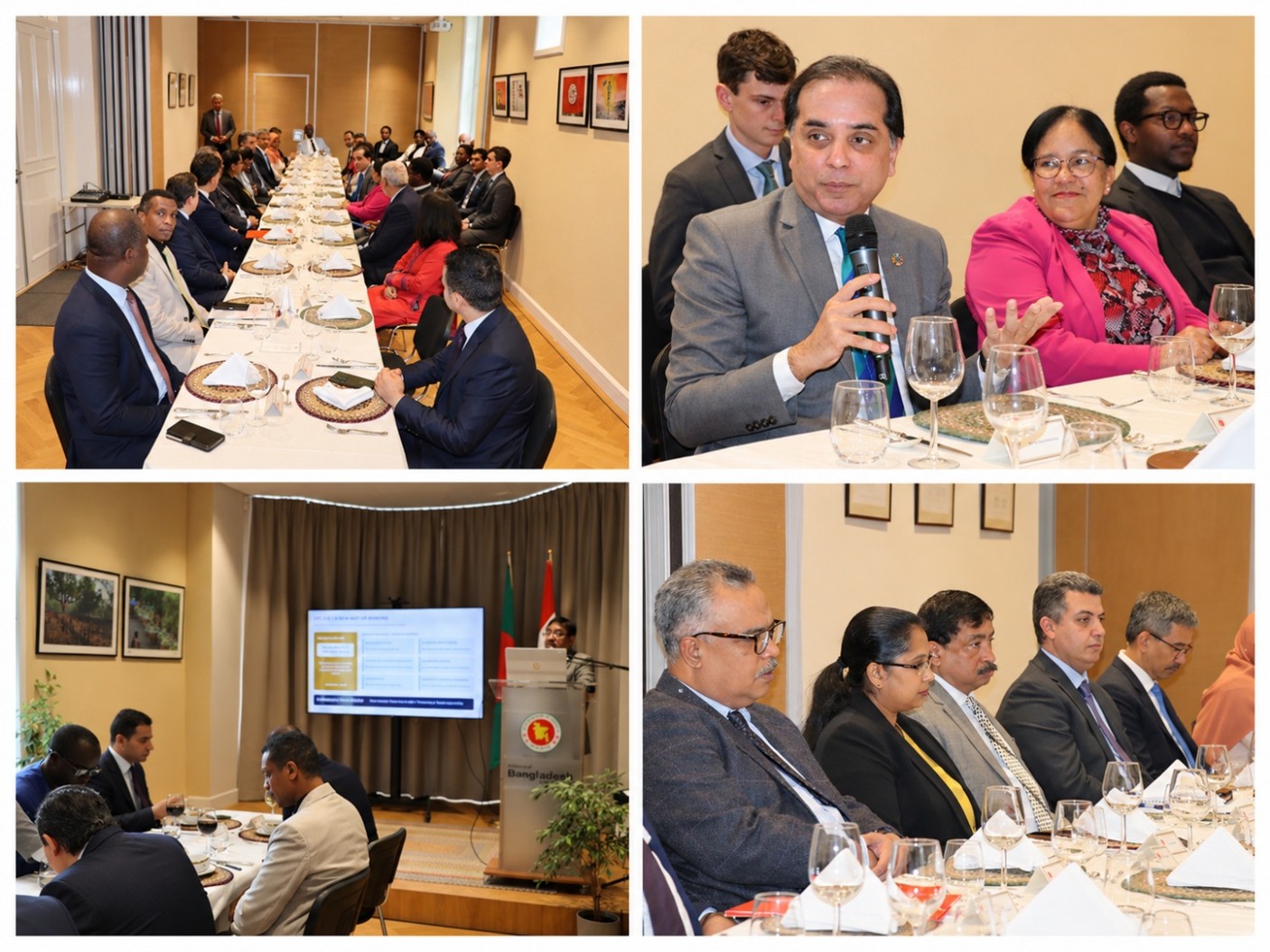
The Hague, 3 November 2026 — The Common Fund for Commodities (CFC) reaffirmed their commitment to advancing inclusive commodity development at the third Friends of CFC luncheon, hosted by the Embassy of Bangladesh in The Hague. Bringing together Ambassadors, diplomatic representatives and CFC partners, the gathering provided an opportunity to reflect on the Fund's evolving role, its growing international recognition and the tangible impact of its investments on commodity-dependent communities.
The luncheon was hosted by H.E. Mr. Faiyaz Murshid Kazi, Ambassador of Bangladesh to the Kingdom of the Netherlands, continuing a tradition of diplomatic engagement initiated by the Embassy of Bangladesh two years ago. The second gathering, held last year, was jointly hosted by the Embassies of the Philippines, Sri Lanka and Tanzania. The third edition brought together a full room of diplomatic representatives, reflecting the continued interest in the CFC's work and the importance of sustained dialogue with its Member States and partners.
In his presentation, Ambassador Sheikh Mohammed Belal, Managing Director of the CFC, recalled the concerns surrounding commodity price fluctuations that emerged during the early discussions leading to UNCTAD I. Decades later, these concerns remain highly relevant, as fluctuations in international commodity markets continue to expose producers and commodity-dependent economies to considerable vulnerability.
While the challenges remain, the CFC's approach has evolved significantly. Building on its original mandate, the Fund is now entering a new phase under CFC 2.0 and its Strategic Framework 2025–2035, with a renewed focus on mobilizing investment, supporting rural enterprises and ensuring that smallholder producers participate more meaningfully in commodity value chains.
"The challenges that brought the CFC into existence have not disappeared. Commodity price fluctuations continue to affect the livelihoods of millions of producers. What has evolved is our ability to respond. We are moving beyond addressing financing gaps alone towards building ecosystems around commodity production, where farmers, cooperatives and rural enterprises can grow together," Ambassador Belal noted.
The Managing Director also highlighted the growing international recognition of the CFC, including its reference in paragraph 46(d) of the Sevilla Commitment on Financing for Development, which calls for increased voluntary contributions to the Fund to scale up support for developing countries, particularly least developed countries, in promoting value addition, processing and manufacturing. He also recalled the recent recognition of the CFC's enduring contribution in discussions involving the Group of 77.
Together with growing partnerships with international development partners, these developments signal a new chapter for the Fund, creating opportunities to expand its reach and mobilize additional resources for commodity-dependent communities.
Beyond institutional developments, Ambassador Belal shared reflections from his recent missions to Uganda and Cameroon, illustrating how CFC investments translate into tangible improvements in people's lives.
One particularly striking example concerned a cooperative whose growing economic activities have enabled its farmer members to improve their living conditions. Some farmers who once depended on modest rural livelihoods now own brick houses, have garages and cars, and keep livestock such as cows. What began as support for agricultural production has gradually developed into a wider village-level economic ecosystem.
"This is what we mean by Humanizing the Value Chains. When a farmer can build a house, own a car, keep livestock and provide better opportunities for their family, we see the real meaning of our work. And the impact does not stop with one farmer. The income circulates within the village, supporting local businesses, services and other livelihoods. We are not simply financing commodities; we are investing in people and the communities around them," Ambassador Belal explained.
He emphasized that this is the essence of the CFC's Humanizing the Value Chains approach: ensuring that financing reaches the enterprises and communities closest to commodity production, allowing economic opportunities and benefits to circulate more widely at the local level.
The exchange also offered Member States an opportunity to share their perspectives, express support for the Fund and discuss how the CFC could further increase the visibility of its work and demonstrate the impact of its investments. Participants recognized the importance of continued engagement, stronger partnerships and greater awareness of the CFC's contribution to sustainable commodity development.
In his remarks, H.E. Mr. Faiyaz Murshid Kazi, Ambassador of Bangladesh, welcomed the gathering and reaffirmed the importance of continued cooperation between the CFC and its Member States.
"We are pleased to host the third Friends of CFC luncheon and to provide a platform for our partners to come together, exchange perspectives and learn more about the Fund's work. Initiatives such as this help strengthen our collective understanding of the opportunities ahead and the importance of supporting the communities that depend on commodities," Ambassador Kazi remarked.
Ambassador Belal expressed his appreciation to the Embassy of Bangladesh for its continued leadership and hospitality, as well as to all participating Ambassadors and diplomatic representatives for their engagement and support.
The third Friends of CFC luncheon reaffirmed the importance of sustained dialogue between the Fund and its Member States as the CFC enters its next phase of development. With growing international recognition, expanding partnerships and a renewed strategic direction, the Fund is working to translate its mandate into tangible opportunities for commodity producers and rural enterprises.
Ultimately, the measure of the CFC's work is not only the financing it mobilizes, but the lives and communities it helps transform. When a cooperative grows, a farmer prospers and an entire village begins to thrive, the impact of commodity finance becomes visible far beyond the value chain itself.