CFC GC38 Side Event Highlights: circular economy and inclusive value chains as pathways to poverty alleviation
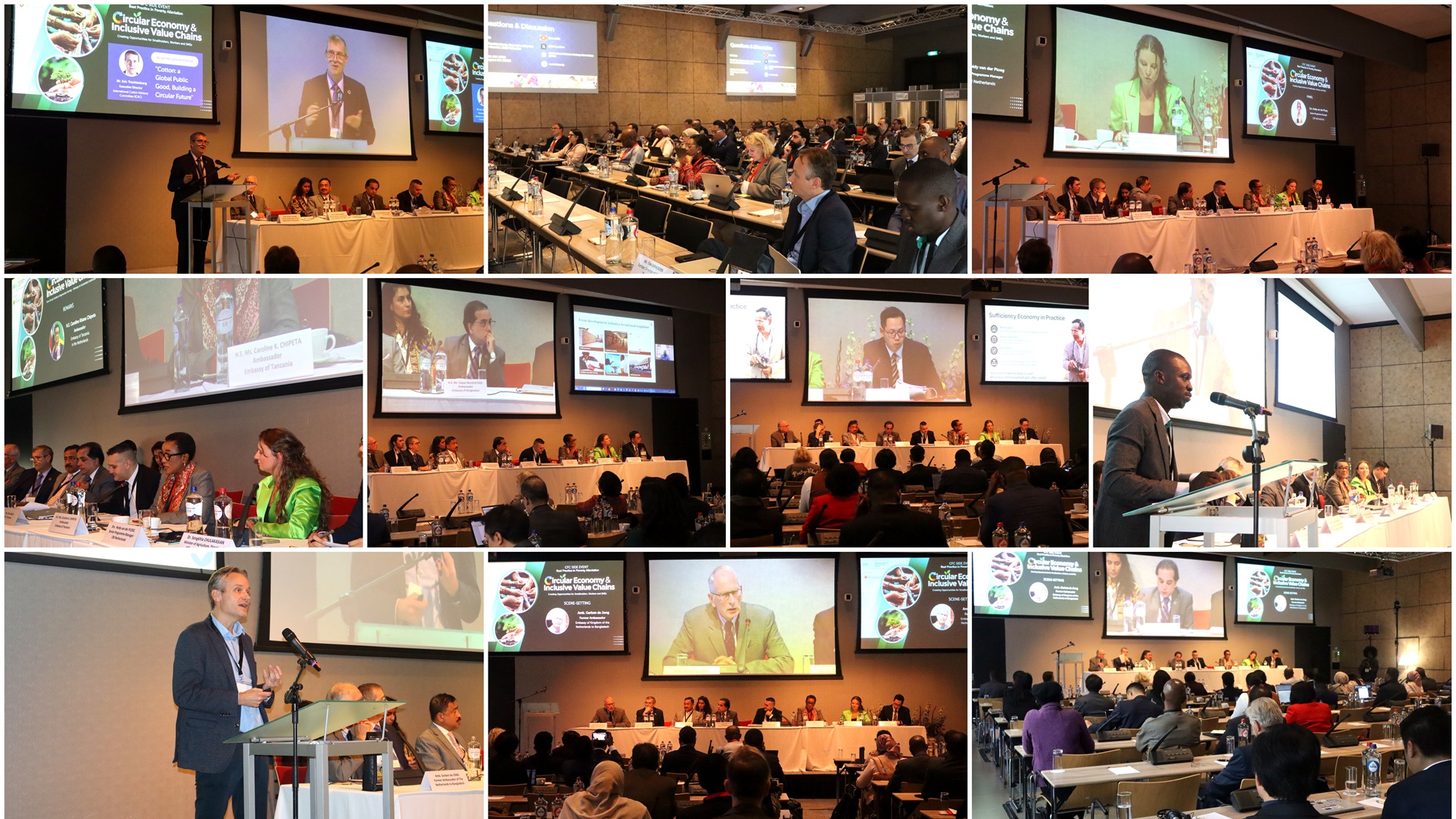
The Hague, 16 November 2026 – The Common Fund for Commodities (CFC), in collaboration with the Embassy of Bangladesh to the Netherlands, convened a side event on “Best Practices in Poverty Alleviation: Circular Economy and Inclusive Value Chains” on 16 November 2026, alongside the 38th Annual Meeting of the CFC Governing Council in The Hague.
The event brought together representatives of Member States, international organisations, development institutions and private-sector enterprises to exchange practical experiences on how circular economy approaches, sustainable agricultural practices and inclusive business models can improve livelihoods and create greater economic opportunities for smallholders, workers and SMEs.
At the heart of the discussion was a shared recognition that circularity must go beyond reducing waste and conserving resources. It must also create economic value and ensure that a fairer share of that value reaches the communities responsible for producing the world's commodities. This approach reflects the CFC's commitment to Humanizing the Value Chains, placing the dignity, livelihoods and resilience of producers at the centre of economic development.
Building Fairer and More Sustainable Global Value Chains
The event was chaired by H.E. Mr. Faiyaz Murshid Kazi, Ambassador of Bangladesh to the Netherlands, reflecting the importance of international cooperation in advancing sustainable and inclusive commodity value chains.
In his scene-setting remarks, Ambassador Gerben de Jong, former Ambassador of the Netherlands to Bangladesh, reflected on his experience with the establishment of the CFC and the lessons of the 2013 Rana Plaza collapse in Bangladesh. He emphasised the importance of decent working conditions, fair wages and greater accountability in global supply chains, while cautioning that growing sustainability requirements should not impose disproportionate burdens on producers in developing countries.
Delivering the keynote presentation, Mr. Eric Trachtenberg, Executive Director of the International Cotton Advisory Committee (ICAC), highlighted cotton's importance to the livelihoods of approximately 24 million farmers worldwide, 43 per cent of whom are women. He outlined opportunities to improve incomes through regenerative agriculture, local textile processing and stronger South–South cooperation, particularly between African cotton producers and textile-manufacturing countries such as Bangladesh. He also underscored the need to ensure that sustainability standards and compliance costs do not exclude smallholders from international markets. Mr Eric highlighted how value addition brings more income for the smallholders should such value additions take place at the county of origin.
Learning from Member States: Enabling Businesses, Strengthening Markets and Promoting Circular Agriculture
The discussion featured practical experiences from the Netherlands, Tanzania and Thailand, demonstrating how public policy, institutional development and locally adapted innovations can support more inclusive and sustainable commodity economies.
- Drs. Heidy van der Ploeg of CBI Netherlands highlighted CBI’s innovative approach to helping SMEs in developing countries compete internationally. By combining hands-on technical assistance with market intelligence and links to European buyers, CBI helps enterprises understand what buyers need, adapt their products and practices, and build lasting commercial relationships. She also underscored the importance of an enabling business environment so that more SMEs can benefit from these opportunities.
- Tanzania’s warehouse receipt system is one of many innovations the CFC has helped pioneer in the Global South. Introduced by H.E. Ambassador Caroline Kitana Chipeta, Mr. Asangye N. Bangu, Managing Director of Tanzania’s Warehouse Receipts Regulatory Board, traced the system’s evolution from the CFC’s early support in 1999. Today, it facilitates structured trade in 18 commodities across 23 regions, with approximately 1.12 billion kilograms marketed in the 2025/26 financial year. The system improves price transparency, expands access to finance and gives farmers more choice over when to sell. When the Chair asked how widely this farmer-focused innovation had spread, Tanzania and Kenya were the only countries identified in the discussion. Tanzania’s experience shows what sustained investment can achieve in one country and how much scope remains to scale up CFC-supported innovations across the Global South.
- Dr. Songkhla Chulakasian, Minister (Agriculture) at the Royal Thai Embassy in Brussels, presented Thailand’s Sufficiency Economy Philosophy, developed by the late King Bhumibol Adulyadej (Rama IX). The philosophy rests on moderation, reasonableness and prudence, guided by knowledge and morality. In business, it encourages decisions that serve all stakeholders and sustain profitability over the long term. Dr. Chulakasian illustrated how these principles work in practice through the experience of a rice farmer in Nakhon Sawan, where soil testing, crop rotation, reuse of rice straw and locally developed organic preparations helped reduce waste, improve soil health and strengthen household resilience.
From Local Enterprises to Lasting Impact: Coffee and Regenerative Agriculture
The event also showcased the experience of enterprises and organisations working directly with smallholder communities, demonstrating how commercially viable business models and innovative financing can translate sustainability principles into measurable improvements in livelihoods.
- Mr. Julius Kalulu, Founder and CEO of JKCC General Supplies Limited, told a story that once seemed impossible. Driven by his determination to raise farmers’ incomes, JKCC grew from a modest US$130,000 operation in 2017 into a nearly US$79 million Ugandan coffee processor and exporter by 2026, an approximately 608-fold expansion. Today, the company works with more than 14,000 farmers across 33 districts. Through fairer farmgate prices, farmer training, investment in local processing and initiatives that promote regenerative agriculture, JKCC helps farmers earn more from their coffee while restoring the soils their livelihoods depend on. Its experience illustrates the CFC’s Humanizing Value Chains approach in practice, with farmers’ incomes and the long-term health of the land guiding how the business grows.
- Mr. Tim Diphoorn, Europe Director of Business Development at One Acre Fund, shared practical examples of regenerative and circular agriculture across Africa, including converting avocado-processing waste into organic fertiliser in Rwanda and agricultural residues into biochar in Kenya. These approaches demonstrate how agricultural by-products can be transformed into productive resources, reducing waste while improving soil health and generating additional economic opportunities.
Bangladesh's Jute Exhibition: Showcasing a Natural Fibre for a Circular Future
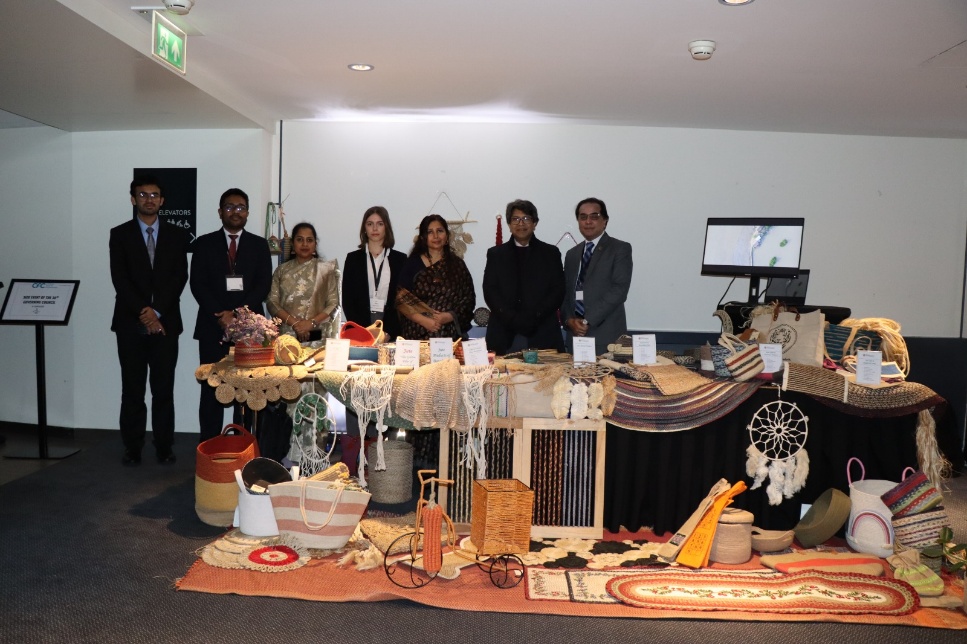
Complementing the discussions, the Embassy of Bangladesh organised a jute exhibition at the side event venue, showcasing the potential of this natural fibre as a sustainable alternative to conventional materials.
Jute is biodegradable, renewable and recyclable, offering opportunities to reduce dependence on synthetic materials while supporting environmentally responsible production and consumption. The exhibition highlighted Bangladesh's rich heritage in jute production and the fibre's potential applications in sustainable packaging, textiles and other value-added products.
From Circularity to Inclusive Prosperity
In his closing remarks, Ambassador Sheikh Mohammed Belal, Managing Director of the CFC, called for commodity value chains that use resources more efficiently and retain more value in producing communities. He stressed that regenerative practices, local processing and fair market access require affordable finance and technical assistance.
Turning to wage protests in Bangladesh’s garment sector, he noted that factories can receive larger orders while earning less per garment, limiting their ability to raise wages. As Public Eye and the Clean Clothes Campaign put it in Squeezed Dry, “Sourcing prices are the bottleneck for better wages.” He called for sustainability audits to trace the link between brands’ wage commitments, the prices they pay suppliers and the wages workers receive. That accountability is central to the CFC’s Humanizing Value Chains initiative. www.publiceye.ch
Ambassador Belal stressed that circularity must advance environmental sustainability and poverty reduction together. He thanked the Embassy of Bangladesh for co-hosting the event and all speakers and participants for their contributions.
About the Common Fund for Commodities (CFC)
The CFC is an UN-affiliated international financial institution based in Amsterdam, working in over 100 countries to support inclusive economic development through impact investing in commodity value chains.
For media inquiries, please contact:
[CFC Media Relations Team]
[Email: managing.director@common-fund.org]
[Phone: +31 20 575 4949]