CFC highlights Nature-Based Solutions and Technological Innovation as new Frontiers for Commodity-Dependent Economies at the United Nations
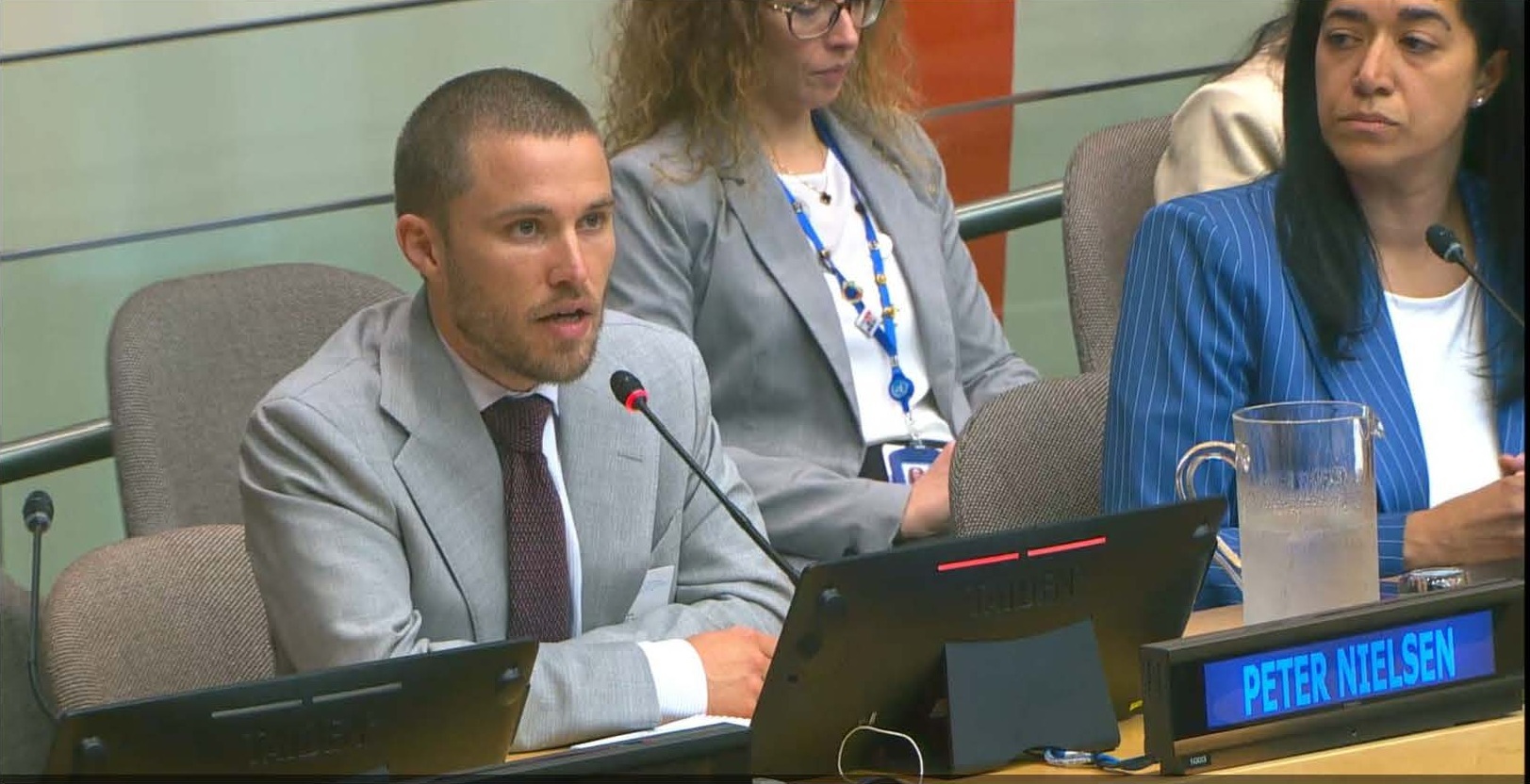
New York, 21 May 2026 — At a high-level United Nations discussion on commodity-dependent economies presided over by H.E. Ms. Annalena Baerbock, President of the 80th Session of the United Nations General Assembly, Mr. Peter Nielsen, Investment Manager and Lead of the Innovative Finance Lab at the Common Fund for Commodities (CFC), emphasized that nature-based solutions, combined with emerging technologies and innovative financing mechanisms, represent one of the most promising opportunities for strengthening resilience, diversifying incomes, and advancing sustainable development across commodity-producing countries.
Speaking during the panel discussion, Mr. Nielsen noted that while traditional challenges surrounding value addition, processing capacity, infrastructure, finance, market access, and quality standards remain critically important, a new opportunity is emerging at the intersection of climate action, biodiversity preservation, and commodity development.
He stressed that regenerative agriculture, agroforestry, afforestation, sustainable forestry, and other nature-based production systems can now generate measurable environmental assets with growing market value. Advances in digital technologies, satellite monitoring, geospatial systems, remote sensing, traceability tools, and carbon verification methodologies are increasingly enabling these positive environmental outcomes to be verified, documented, and monetized in ways that were previously not possible.
According to Mr. Nielsen, this creates an entirely new income diversification opportunity for commodity-dependent economies — particularly for smallholders and rural communities that historically remained trapped at the lowest end of global value chains. In addition to producing agricultural commodities such as coffee, cocoa, or timber, communities can now generate environmental commodities and ecosystem services, including carbon credits and biodiversity outcomes, creating additional revenue streams that are often delinked from volatile commodity prices.
Drawing from the CFC’s operational experience, Mr. Nielsen highlighted ongoing initiatives demonstrating the practical potential of such approaches. In the Democratic Republic of the Congo, under the umbrella of the Central African Forest Initiative (CAFI), the CFC is implementing an innovative large-scale agroforestry and Payments for Ecosystem Services (PES) initiative supporting approximately 4,000 smallholders through sustainable fuelwood production and stable crop systems. The initiative combines agroforestry, remote sensing technologies, satellite-based verification systems, geospatial monitoring, environmental performance tracking, and results-based climate financing mechanisms to reward farmers for verified positive environmental outcomes.
Mr. Nielsen emphasized that this groundbreaking initiative — made possible through the support of CAFI and its donor partners — demonstrates how technological innovation and climate finance can now be harnessed to generate new income opportunities for smallholders that were previously unimaginable within traditional commodity systems. Participating farmers are expected to receive up to USD 300 annually in cash and in-kind incentives linked directly to verified environmental outcomes — representing a significant share of local per capita income in the targeted communities.
He also referred to ongoing work in Peru, where the CFC and local implementing partners are supporting forest-dwelling communities to develop non-timber forest product initiatives capable of generating carbon credits alongside coffee production. These activities could generate additional annual income of approximately USD 1,000 per community member.
Mr. Nielsen underlined that while nature-based solutions are not a panacea for commodity dependence, they nevertheless provide tangible livelihood opportunities for smallholders while simultaneously contributing to global climate and biodiversity objectives.
He further noted that international climate and biodiversity financing commitments are already reaching hundreds of billions of dollars annually, while voluntary carbon markets are expanding rapidly and may soon rival the export value of some traditional agricultural commodities. This, he argued, presents a strategic opportunity for commodity-dependent economies to participate more meaningfully in emerging green markets.
As the only UN-affiliated international financial institution dedicated exclusively to commodity development and commodity-dependent economies, the CFC has increasingly been positioning itself at the forefront of innovative approaches that seek to humanize global value chains by ensuring that smallholders, rural communities, cooperatives, and SMEs benefit more fairly from the evolving global economy.
Mr. Nielsen called upon commodity-exporting countries to strengthen the legal, regulatory, and technological infrastructure necessary to support the production and verification of nature-based solutions, while also encouraging importing countries to strengthen traceability systems, disclosure frameworks, and market incentives that reward sustainable production practices.
Concluding his remarks, Mr. Nielsen emphasized that governments, development finance institutions, private investors, and businesses all share responsibility for piloting and scaling innovative financing models capable of addressing poverty, commodity dependence, climate change, and biodiversity loss simultaneously — while bringing new income opportunities to millions of smallholders who have historically remained excluded from higher-value segments of global markets.