What's next for cocoa? CFC and Côte d'Ivoire's Agriculture Minister sit down to strengthen the value chain
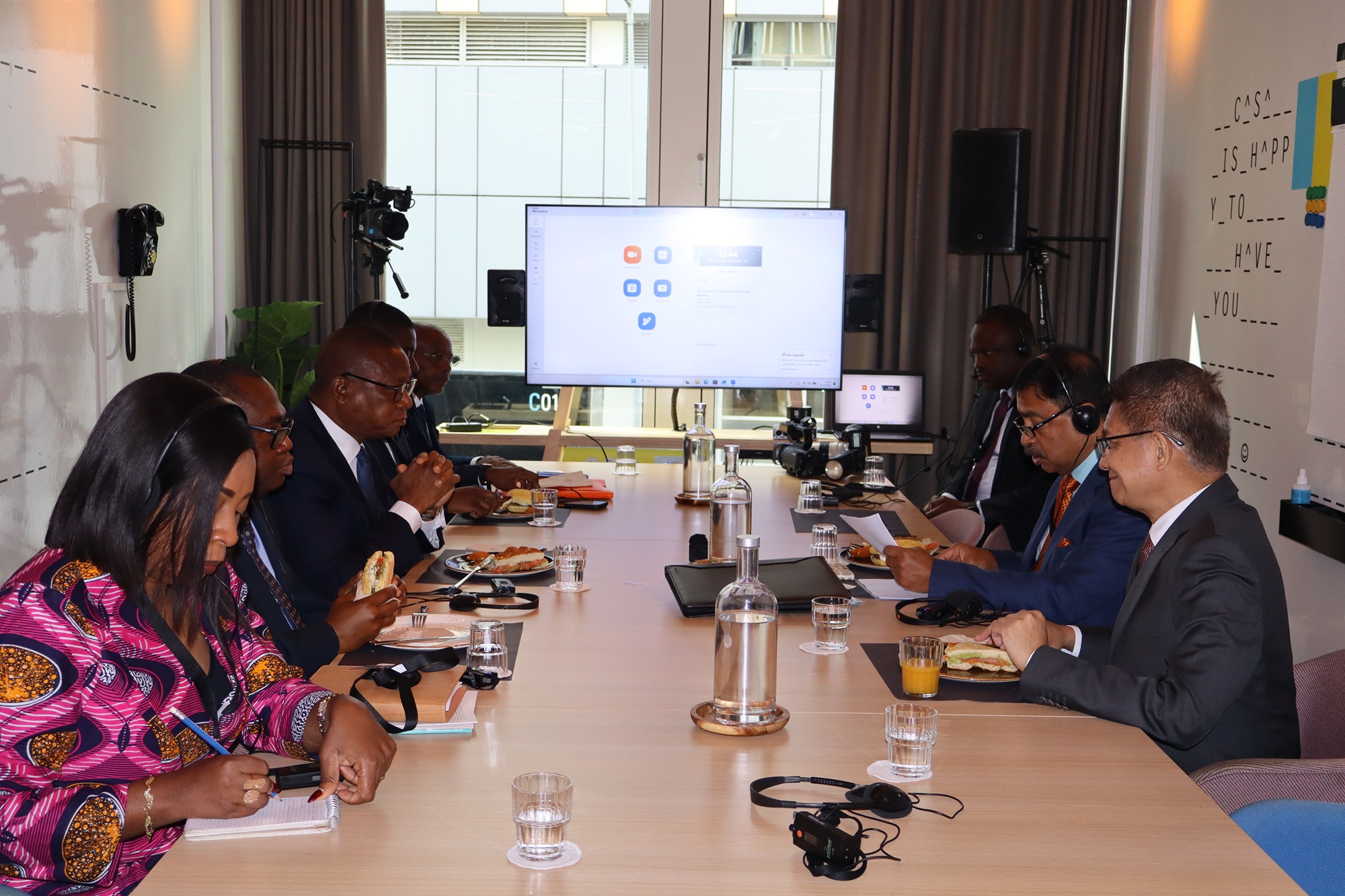
Amsterdam, 16 September 2026 — On the sidelines of the 82nd Meeting of the Executive Board of the Common Fund for Commodities (CFC), CFC Managing Director H.E. Ambassador Sheikh Mohammed Belal and Executive Board Chairperson H.E. Ambassador J. Eduardo Malaya held a working lunch with H.E. Mr. Bruno Nabagné Koné, Governor of the CFC for Côte d’Ivoire and Minister for Agriculture, Rural Development and the Production of Food Crops, to discuss opportunities to deepen cooperation between Côte d’Ivoire and the CFC.
The meeting was also attended by H.E. Mr. Mifougo Youssouf Diarrassouba, Ambassador of Côte d’Ivoire to the Netherlands, together with members of the Ivorian delegation.
The discussions focused on Côte d’Ivoire’s priorities for agricultural and commodity development, including improving livelihoods for low-income farmers, increasing value addition and domestic processing, strengthening food security and addressing water-related challenges.
“The CFC is headquartered in Amsterdam, not in Abidjan. Yet institutional distance should never become operational distance. Côte d’Ivoire is one of the world’s most important commodity economies, and the CFC is ready to work with you far more extensively than we do today.”
— H.E. Ambassador Sheikh Mohammed Belal, Managing Director, Common Fund for Commodities
Ambassador Belal highlighted the longstanding partnership between Côte d’Ivoire and the CFC. Over the years, the Fund has supported 31 projects in Côte d’Ivoire, covering cocoa, fertilizers, sugar, cotton, coffee, tropical fruits and rubber. These initiatives have worked with cooperatives and smallholder farmers to improve access to finance, markets, knowledge and opportunities for value addition.
The discussion placed particular emphasis on cocoa and the potential to move further from the production and export of raw commodities towards greater processing and value creation within Côte d’Ivoire. The CFC recently approved financing for SOCODD and COOPAZA, with USD 1 million trade-finance facilities for each cooperative, supporting cocoa purchases linked to international orders and strengthening liquidity and financing for farmers.
The CFC’s financing will be complemented by targeted technical assistance supported by the Tony’s Chocolonely Foundation and implemented in partnership with the CFC. The support will strengthen the operational capacity of both cooperatives and reinforce living-income initiatives for their members, including COOPAZA’s initiative supported by Ben & Jerry’s. The partnership brings together finance, technical assistance and responsible private-sector engagement to strengthen cocoa cooperatives and improve outcomes for smallholder farmers.
“Our priority is to ensure that commodity development translates into greater opportunities for our farmers and greater value for Côte d’Ivoire. We need to continue strengthening production, but also invest in processing and value addition, while ensuring food security and addressing challenges such as water. This is where stronger cooperation with the CFC can be particularly valuable.”
— H.E. Mr. Bruno Nabagné Koné, Governor of the CFC for Côte d’Ivoire and Minister for Agriculture, Rural Development and the Production of Food Crops
The meeting also explored opportunities to develop higher-value cocoa products, including cocoa liquor, butter, powder and ingredients, as well as innovative uses of cocoa pulp, shells and other by-products. The participants discussed how greater domestic processing could support employment, local enterprise development and increased value retention in Côte d’Ivoire.
Technology was another area of discussion, with the CFC highlighting the potential of digital tools, remote sensing and responsibly designed artificial intelligence to provide farmers with timely information on weather, climate, agronomy, disease risks, markets, prices, traceability and access to finance.
The CFC also proposed exploring a national commodity strategy for Côte d’Ivoire, beginning with cocoa while considering the country’s wider commodity base. Such a strategy could help identify priority value chains, investment opportunities, processing potential and areas where technical assistance and blended finance could unlock further private investment.
The discussions also highlighted the strategic opportunity presented by the presence of the International Cocoa Organization (ICCO) in Abidjan, with the CFC expressing interest in closer cooperation among the Government of Côte d’Ivoire, ICCO and the CFC.
The meeting provided a fruitful exchange on how the CFC and Côte d’Ivoire can build on their longstanding partnership and develop more concrete opportunities for investment, technical assistance, technology and value-chain development.
“We would now like to work with Côte d’Ivoire so that the country becomes an even stronger global example of commodity transformation. By combining national leadership, CFC finance and technical assistance, modern technology and the resources of responsible partners, we can develop solutions that are commercially viable, socially inclusive and capable of being scaled.”
— H.E. Ambassador Sheikh Mohammed Belal
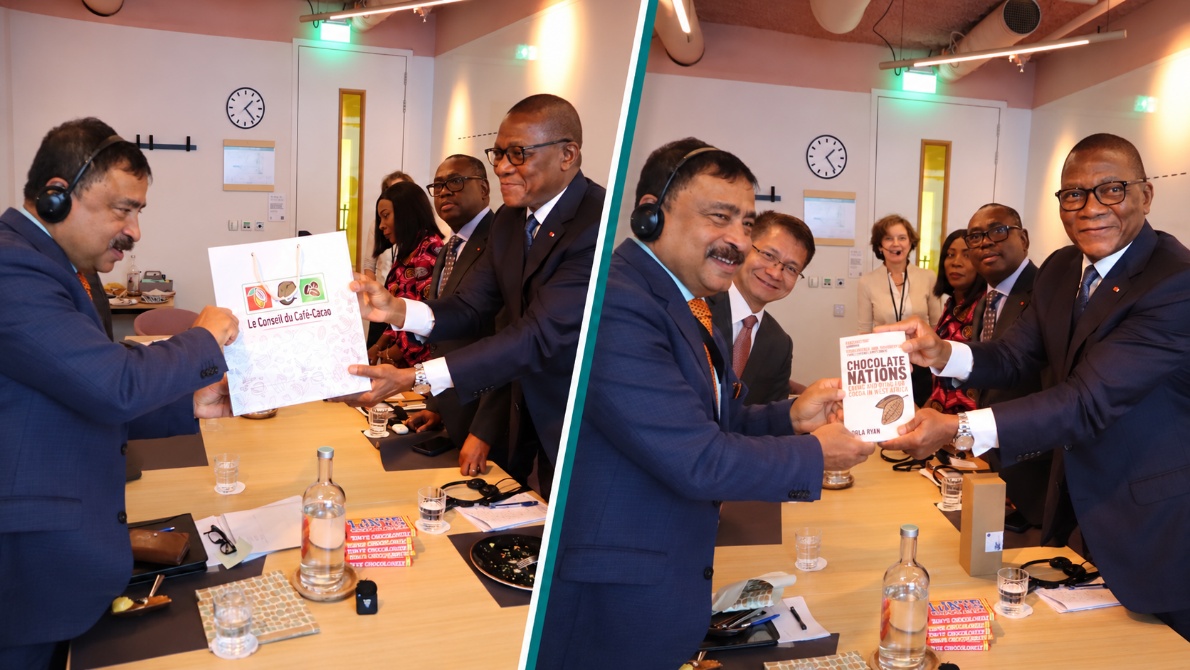
The CFC and Côte d’Ivoire reaffirmed their interest in taking the partnership to a new level, with a focus on stronger farmer livelihoods, greater domestic value addition, resilient food systems and increased opportunities for investment across Côte d’Ivoire’s commodity sectors.
About the Common Fund for Commodities
The Common Fund for Commodities (CFC) is a UN-affiliated international financial institution headquartered in Amsterdam. Established in 1989 following the work of the United Nations Conference on Trade and Development (UNCTAD), the CFC provides investment and technical assistance to support sustainable commodity development in developing countries.