CFC marks 37 years of common action for commodities
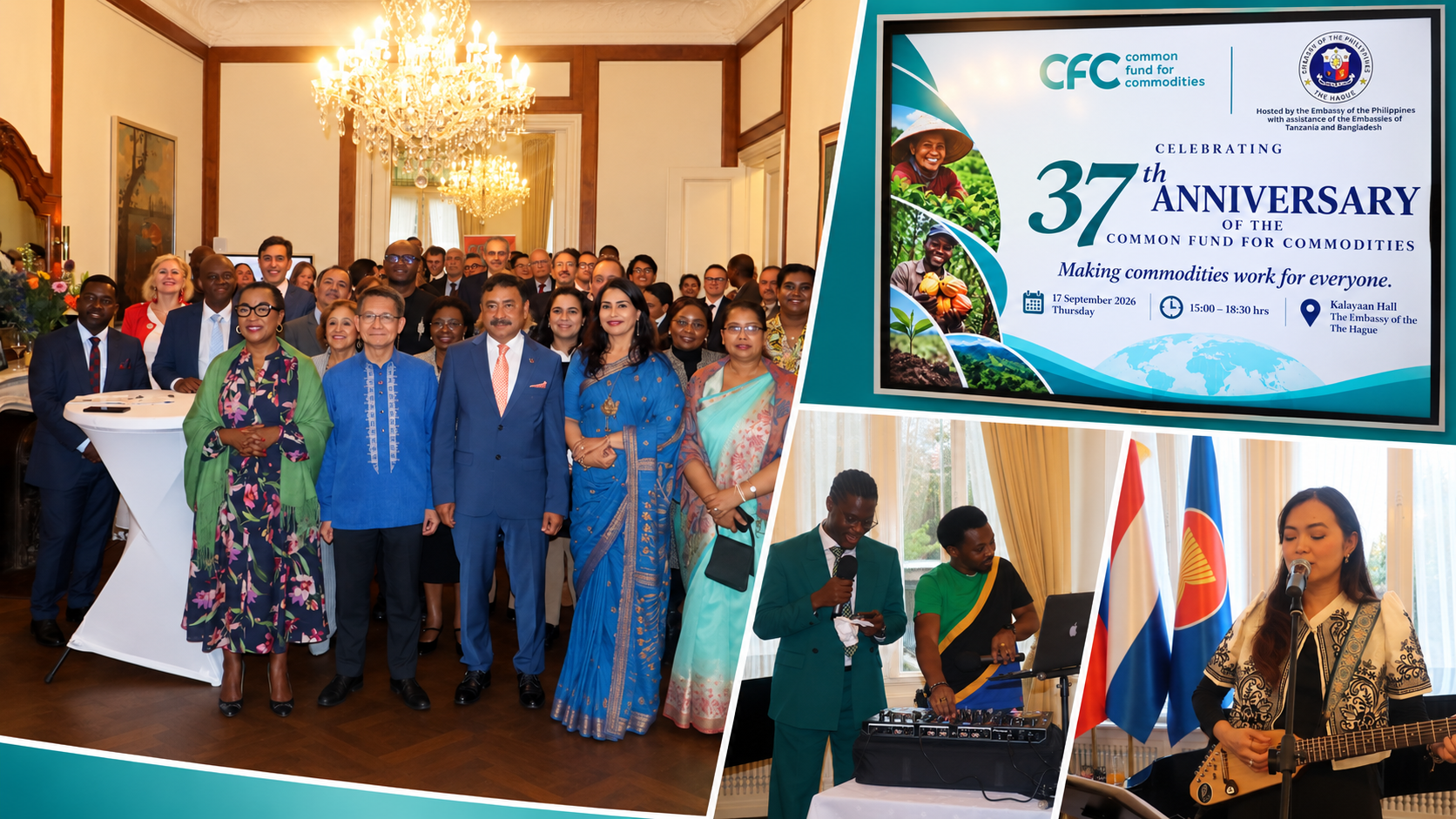
The Hague, 17 September 2026 — The Common Fund for Commodities (CFC) marked its 37th anniversary with a reception bringing together Ambassadors, representatives of Member States, development partners, colleagues and friends of the CFC for an evening celebrating international cooperation, shared commitment and the people behind commodity value chains.
The CFC’s anniversary falls on 15 September, and this year’s celebration followed the 82nd session of the CFC Executive Board, held on 16 September in Amsterdam. The sequence of the two events provided an opportunity for Member States and partners to move from formal discussions on the CFC’s work and future direction to an evening of friendship and celebration.
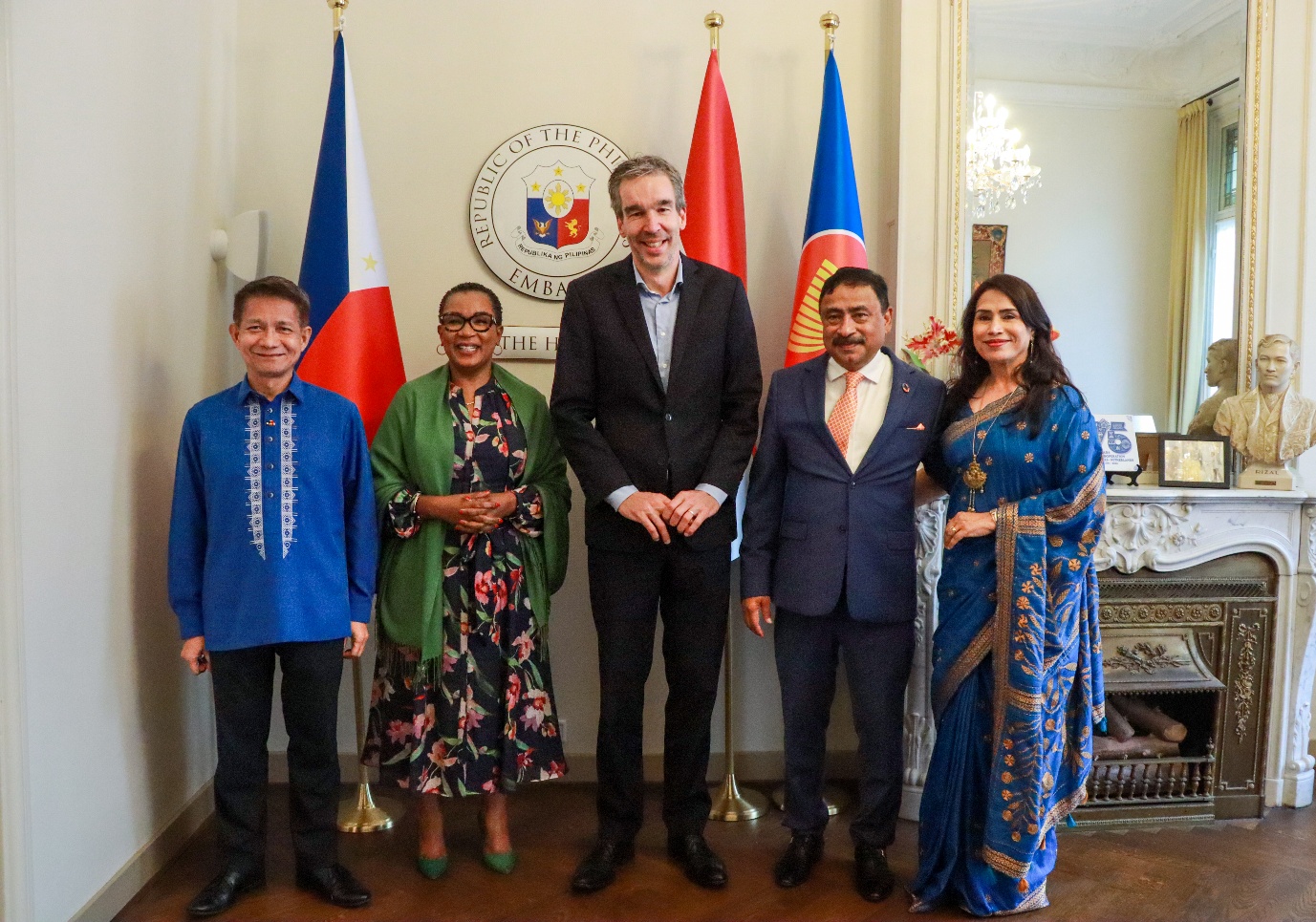
Hosted by the Embassy of the Philippines and co-hosted by the Embassies of Tanzania and Bangladesh, the anniversary reception reflected the international character of the CFC and the diversity of countries that make up its community.
The spirit of bringing countries together was visible throughout the evening — from the participation of Ambassadors and representatives of CFC Member States to the shared national food of the Philippines, Tanzania and Bangladesh, a performance by Philippine singer-songwriter Ms. Acel Bisa van Ommen, and music from a Tanzanian DJ.
The celebration offered not only an opportunity to reflect on 37 years of the CFC’s work, but also to celebrate the relationships, partnerships and friendships that make international cooperation possible.
Celebrating the CFC’s journey
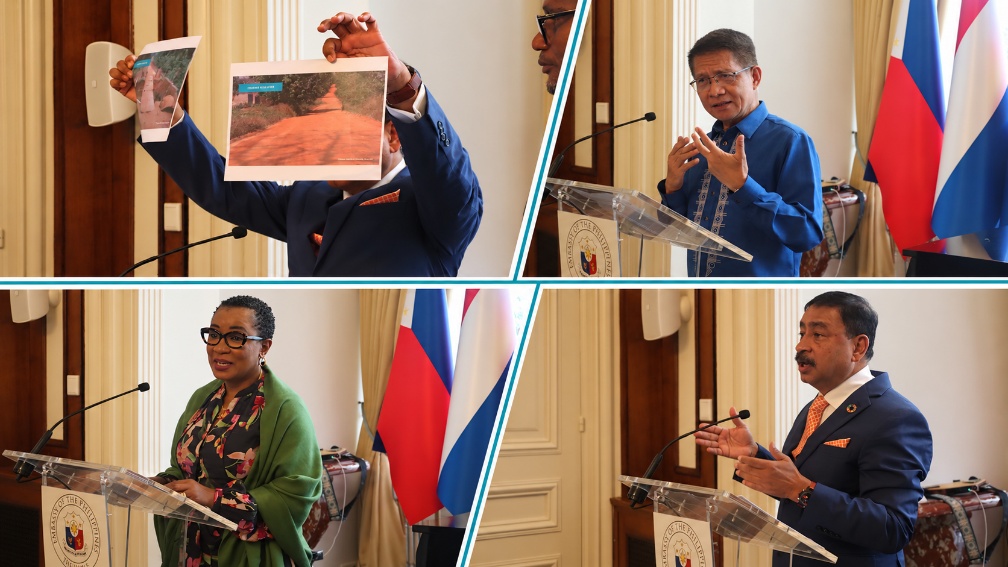
Opening the formal programme, H.E. Ambassador J. Eduardo Malaya, Chairperson of the CFC Executive Board and Ambassador of the Philippines to the Netherlands, welcomed guests and reflected on the CFC’s growth and its ability to mobilise resources for developing countries.
Over the past two years, the CFC has mobilised approximately USD 84 million, strengthening its capacity to support investment and technical assistance across commodity value chains.
“The growth of the CFC is a reflection of what we can achieve when Member States, partners and the institution come together around a shared purpose — mobilising resources and turning them into meaningful development opportunities.” — H.E. Ambassador J. Eduardo Malaya, Chairperson of the CFC Executive Board
Ambassador Malaya also marked the conclusion of his tenure as Chairperson of the Executive Board. He noted that H.E. Ambassador Rekha Gunasekera, Ambassador of Sri Lanka to the Netherlands, will succeed him as Chairperson.
His remarks also reflected on the importance of continuity and collective ownership as the CFC enters its next chapter.
Humanizing the value chains: looking beyond the commodity
Ambassador Sheikh Mohammed Belal, Managing Director of the Common Fund for Commodities, highlighted the CFC’s distinctive approach to commodity development and its focus on Humanizing the Value Chains.
The approach looks beyond commodities themselves to understand the people, businesses and communities that make value chains function — from farmers and workers to local enterprises and the families whose livelihoods depend on them.
To bring this approach to life, Ambassador Belal invited members of the Sierra Leone delegation who had travelled from Freetown to the Netherlands to join him at the front of the room and share the story of Goldtree, a CFC investee producing organic palm oil in Sierra Leone.
Goldtree had experienced declining yields and began investigating the reasons behind the change. The challenge turned out not simply to be agricultural productivity. Farmers were facing difficulties bringing their fruit to the mill because of inadequate rural road connections.
Goldtree responded by investing in rural roads and improving connections with surrounding communities, making it easier for farmers to transport their fruit to the mill and strengthening the wider value chain.
By inviting the Sierra Leone delegation forward, Ambassador Belal gave guests an opportunity to hear the experience in a more direct and personal way — demonstrating how a seemingly simple investment in infrastructure can have wider implications for producers, businesses and communities.
“Sometimes, when we look at a commodity value chain, we focus on the commodity itself. But behind every commodity there are people, communities and businesses. Goldtree showed us that when the roads are not there, the value chain cannot work — and investing in those connections can make all the difference.”— H.E. Ambassador Sheikh Mohammed Belal, Managing Director, CFC
The story captures the broader philosophy behind the CFC’s Humanizing Value Chains approach: successful commodity development is not measured only by how efficiently a commodity reaches a market, but also by whether the people who create that value can participate meaningfully in the opportunities it generates.
The CFC works particularly with the “missing middle” — promising businesses that have moved beyond microfinance but remain underserved by conventional finance. Through investment and technical assistance, the CFC supports enterprises to grow, create jobs, add value locally, strengthen food systems and connect producers to better markets.
From commitment to action
The formal programme concluded with remarks from H.E. Ambassador Caroline Kitana Chipeta, Chairperson of the CFC Governing Council, who placed the CFC’s work within the broader international development agenda.
Ambassador Chipeta highlighted the importance of the Sevilla Commitment and its role in creating momentum around development finance and institutions working to address financing gaps in developing economies.
She emphasised that the next step is to translate these commitments into practical action.
“The Sevilla Commitment has already paved the way. Now is the time to act — to turn our commitments into investments, partnerships and concrete results for the people and communities who depend on commodity value chains.” — H.E. Ambassador Caroline Kitana Chipeta, Chairperson of the CFC Governing Council
Her remarks underscored the CFC’s role in translating international commitments into practical financing and support for businesses, producers and communities across developing countries.
Three countries, one celebration
The anniversary reception provided a particularly visible expression of the cooperation that lies at the heart of the CFC.
The Philippines, as host, opened its doors to the CFC community, while Tanzania and Bangladesh joined as co-hosts. Their partnership was reflected not only in the formal programme but throughout the evening, with national food from all three countries shared among guests.
The cultural programme continued this celebration of diversity. Philippine singer-songwriter Ms. Acel Bisa van Ommen performed during the evening, bringing Philippine music to the reception, while a Tanzanian DJ kept the celebration going later in the evening.
Together, the food, music and conversations created a setting where countries came together not only as Member States and development partners, but as a community.
“This evening is a reflection of what the CFC is about: bringing people and countries together. From our host, the Philippines, to our co-hosts, Tanzania and Bangladesh, and to all our Member States and partners gathered here, we are celebrating not only 37 years of the CFC, but the cooperation and friendships that make our work possible.”
The CFC expressed its sincere appreciation to the Embassy of the Philippines for its generous hospitality and to the Embassies of Tanzania and Bangladesh for joining as co-hosts and helping make the anniversary celebration possible.
As the CFC enters its 38th year, this anniversary was about far more than marking time. It was a celebration of something far greater: the quiet, relentless resilience of more than three billion smallholders around the world — the farmers, workers, and communities who rise before dawn and labour long after sunset, not for recognition, but because the world depends on them.
They are the ones who keep us fed, clothed, nourished, and mobile. They are the invisible backbone of every value chain, the hands behind every harvest, the strength behind every market. And yet, too often, they remain the most underserved, the most overlooked, the most underestimated.
Tonight, we celebrated them. We celebrated their grit, their dignity, and their unwavering commitment to a world they may never fully see — but without whom that world would simply stop. The CFC’s 37-year journey is not just a story of institutions and investments. It is a story of those three billion-plus smallholders — and of what becomes possible when we finally put them at the centre, where they belong.
About the Common Fund for Commodities
The Common Fund for Commodities (CFC) is a UN-affiliated international financial institution headquartered in Amsterdam. Established in 1989 following the work of the United Nations Conference on Trade and Development (UNCTAD), the CFC provides investment and technical assistance to support sustainable commodity development in developing countries.