CFC Congratulates Incoming ECOSOC President and Strengthens Dialogue on Human-Centred Vision for Global Development
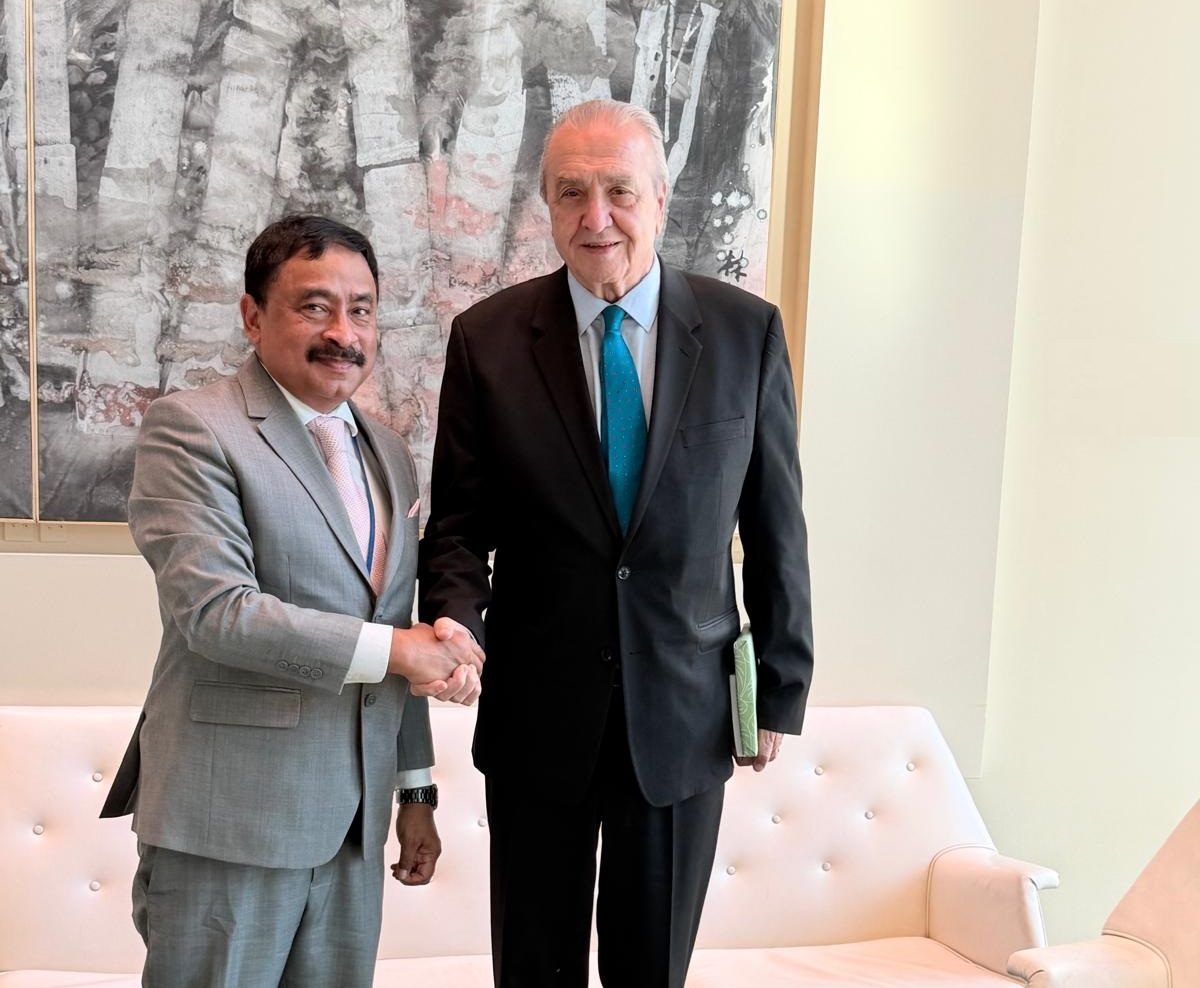
New York, 23 July 2026 — Ambassador Sheikh Mohammed Belal, Managing Director of the Common Fund for Commodities (CFC), held a meeting with H.E. Mr. Amar Bendjama, Permanent Representative of Algeria to the United Nations and incoming President of the United Nations Economic and Social Council (ECOSOC), on the margins of the Financing for Development Forum in New York.
Ambassador Belal congratulated H.E. Mr. Bendjama on his upcoming presidency of ECOSOC and expressed appreciation for his distinguished leadership and contributions within the United Nations, particularly through his role in the Security Council. Ambassador Belal highlighted Ambassador Bendjama’s consistent advocacy for the protection of civilians, humanitarian access, human dignity, and collective responsibility in addressing global crises.
"Your leadership at the United Nations Security Council has demonstrated that behind every crisis are human lives, families, and communities whose dignity and future must remain at the centre of international action. This human-centred approach is equally important in development: ensuring that the people who produce the world's essential commodities are recognized, empowered, and able to benefit fairly from their contribution," Ambassador Belal said.
Ambassador Belal also acknowledged H.E. Mr. Bendjama's standing as one of the United Nations' most respected and principled diplomats, recognized for his steadfast commitment to advancing a world free from hunger, poverty, and conflict. He noted that throughout his diplomatic career, Ambassador Bendjama has consistently championed multilateral solutions that place human dignity, social justice, and sustainable development at the heart of international cooperation. Ambassador Belal expressed confidence that these values and his demonstrated leadership would guide ECOSOC's work in promoting inclusive economic development and delivering tangible improvements in the lives of vulnerable communities worldwide.
The Managing Director noted that the challenges faced by vulnerable communities do not end with the resolution of immediate crises. Sustainable peace and resilience require investments in livelihoods, productive capacity, and economic opportunities that enable communities to rebuild and thrive.
Ambassador Belal highlighted CFC’s work in fragile and conflict-affected contexts, including Afghanistan and Syria, where the organization supports livelihood recovery, strengthens local productive capacity, and helps communities rebuild economic resilience through commodity-based development initiatives.
He emphasized that development interventions must place people at the centre, particularly smallholder farmers, rural workers, and agricultural SMEs who often remain among the most vulnerable actors in global economic systems.
"We cannot build resilient economies without protecting the people who sustain them. The farmers, workers, and communities at the beginning of global value chains are not simply producers—they are families, entrepreneurs, and drivers of local development. Their dignity, contribution, and aspirations must be reflected in the way value is created and shared," Ambassador Belal added.
Ambassador Belal introduced the CFC’s Humanizing the Value Chains initiative, which seeks to place people at the centre of global trade. The initiative aims to address structural inequalities within commodity value chains by promoting fairer value distribution, strengthening productive capacity, supporting value addition at origin, and enabling producing communities to capture a greater share of the economic benefits generated by their work.
The discussion also highlighted the importance of aligning global commitments with practical implementation. Ambassador Belal briefed H.E. Mr. Bendjama on the CFC’s contribution to advancing the objectives of the Sevilla Commitment, particularly paragraph 46, which recognizes the importance of supporting commodity-dependent developing countries through value addition, productive capacity development, and resilient commodity markets.
H.E. Mr. Bendjama welcomed the CFC’s people-centred approach and emphasized the importance of stronger cooperation among international actors to address interconnected global challenges.
Drawing on his experience within the United Nations Security Council, H.E. Mr. Bendjama highlighted that humanitarian concerns, economic resilience, and sustainable development are closely interconnected. He stressed the importance of multilateral cooperation that delivers meaningful results for people and communities.
Both sides discussed the importance of strengthening cooperation within the United Nations framework to ensure that development priorities translate into practical action. They exchanged views on the value of more structured dialogue and cooperation among Member States, international organizations, and development partners to support commodity-producing countries under ECOSOC leadership.
About the Common Fund for Commodities (CFC)
The CFC is a UN-affiliated international financial institution based in Amsterdam, working in over 100 countries to support inclusive economic development through impact investing in commodity value chains.
For media inquiries, please contact:
CFC Media Relations Team
Email: managing.director@common-fund.org
All News