CFC calls for more resilient commodity value chains at UNCTAD meeting in Geneva
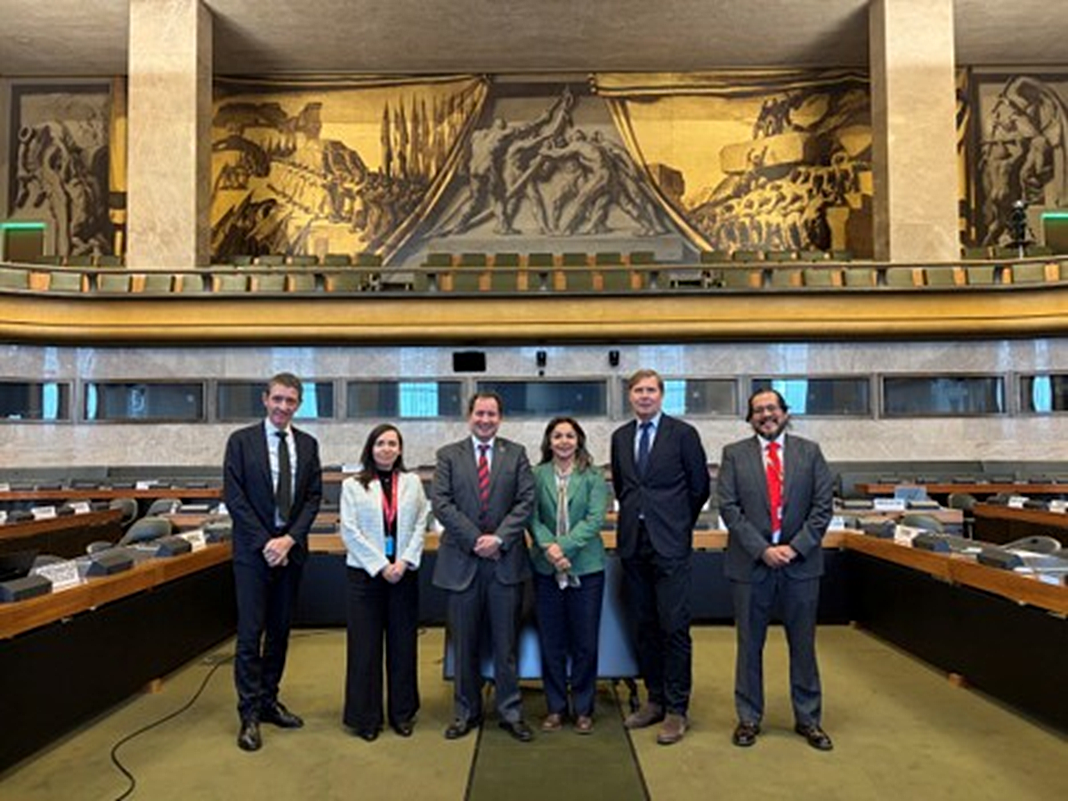
Geneva, 22 October 2026 – The Common Fund for Commodities (CFC) highlighted the importance of building resilient agricultural value chains to address commodity price volatility at the UNCTAD Multi-year Expert Meeting on Commodities, held on 22–23 October at the Palais des Nations in Geneva, Switzerland.
Representing the CFC, Mr. Andrey Kuleshov delivered remarks on “Resilient Agricultural Value Chains to Address Commodity Price Volatility,” examining how market shocks affect not only commodity prices, but also the incomes, liquidity and investment capacity of the producers and enterprises that depend on them.
Beyond price movements: understanding who bears the risk
Commodity price volatility can have far-reaching consequences across agricultural value chains. When prices fall, smallholder farmers may face declining incomes, while traders and processors struggle with cash flow, debt repayment and working capital. When prices rise, producers do not necessarily benefit proportionately, while processors, consumers and import-dependent businesses face higher costs.
These effects are shaped by how risks and opportunities are distributed throughout the value chain. Producers who must sell immediately after harvest, for example, may have limited bargaining power. Access to storage, market information, finance and diverse buyers can help them make better-informed decisions and reduce their exposure to unfavourable market conditions.
The central message of the CFC’s contribution was clear: price volatility is inevitable, but vulnerability can be reduced. Resilience depends on the capacity of producers and enterprises to withstand shocks, adapt to changing market conditions and continue investing in their businesses.
From market exposure to value-chain resilience
Building resilience requires a broader approach than responding to price fluctuations alone. Diversifying products and markets, improving access to market information, strengthening producer organisations and investing in storage and processing can help reduce exposure to market shocks.
Local value addition is particularly important. Moving beyond the sale of raw commodities towards grading, processing and packaging can create additional revenue opportunities, support employment and enable more value to be retained in producing countries.
This approach reflects the CFC’s focus on humanizing the value chains: looking beyond commodities themselves to the smallholders, cooperatives, workers and local enterprises whose livelihoods depend on them. Strengthening these actors is essential to ensuring that agricultural value chains can adapt to market changes while continuing to generate economic opportunities.
Financing resilience and long-term growth
Access to finance remains a critical constraint for many commodity-based small and medium-sized enterprises (SMEs). Working capital is often needed precisely when market conditions become more difficult, yet financing may become harder to obtain as risks increase. This can prevent otherwise viable businesses from maintaining operations, investing in productivity or expanding into new markets.
Through investment, technical assistance and blended finance, the CFC works to address these financing gaps and support enterprises in building their capacity to grow and withstand shocks. Its Graduation Fund and ACT Fund initiatives are part of broader efforts to mobilise resources and help commodity-based businesses become more resilient and investment-ready.
Climate resilience is also integral to the long-term sustainability of agricultural value chains. Investment in climate-resilient production, improved water management and agroforestry can help producers and enterprises respond to environmental pressures alongside market uncertainty.
Ensuring value chains work for the people within them
Addressing commodity price volatility ultimately requires attention to how value, risk and financing are distributed across the entire value chain. Market fluctuations cannot be eliminated, but their effects can be mitigated when producers and enterprises have the resources, information and flexibility to adapt.
For the CFC, the objective is not simply to help commodity-based businesses grow, but to strengthen their ability to sustain operations, invest for the future and generate lasting development benefits.
By connecting finance with technical assistance and investment in local value addition, the CFC seeks to support agricultural value chains in which smallholders, cooperatives and local SMEs are better equipped to navigate uncertainty and retain a greater share of the value they create.