CFC Calls for Human-Centered Trade and Catalytic Finance at UN Financing for Development Forum
New York, 22 April 2026 — Ambassador Sheikh Mohammed Belal, Managing Director of the Common Fund for Commodities (CFC), called for a fundamental shift in how trade and finance are structured to better serve developing countries, emphasizing the need to “humanize the value chains” and strengthen resilience at the grassroots level.
Ambassador Belal added that if trade is the engine of development, then commodities are its fuel—powered in turn by smallholders and SMEs, who serve as the drivers of the broader development process.
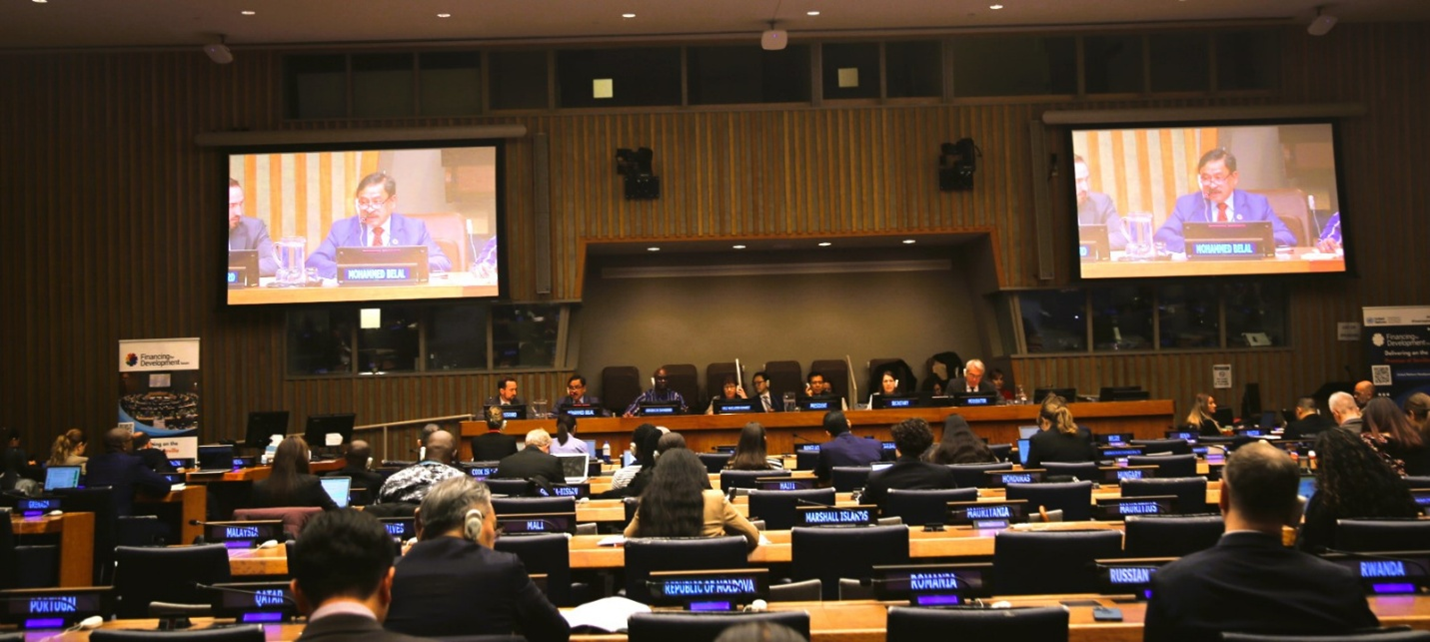
Speaking as a panellist at the Financing for Development (FFD) Forum at United Nations Headquarters in New York, Ambassador Belal highlighted the growing disconnect between global trade systems and the realities faced by farmers, cooperatives, and small enterprises in commodity-dependent economies.
“Trade is not automatically developmental,” he stated. “It becomes developmental only when we invest in productive capacity at the local level—with SMEs, cooperatives, and farmers.”
Grounding his remarks in real-life impact, Ambassador Belal shared the story of Beatrice, a coffee farmer in Uganda whose livelihood depends on volatile commodity markets. He noted that fluctuations in prices, climate shocks, and limited access to finance directly affect her household’s stability—underscoring the urgency of reforming trade and financial systems to deliver reliable income at the local level.
Rising Barriers and Deepening Gaps
Ambassador Belal outlined three critical challenges facing developing countries:
- A sharp increase in tariffs, with average rates on exports from Least Developed Countries rising from 9% to 28% in a single year, effectively penalizing countries still building their value-added capacities;
- A persistent $2.5 trillion global trade finance gap, leaving many SMEs without access to working capital needed for production, storage, and trade;
- Heightened vulnerability to geopolitical shocks, including disruptions to energy and supply chains that drive up input costs such as fertilizers.
“These are not isolated pressures,” he said. “They reinforce each other, turning trade into a channel of vulnerability rather than development.”
From Commitments to Practical Solutions
Ambassador Belal emphasized the importance of implementing key provisions of the Sevilla Commitment, particularly those related to value addition and SME trade finance. He stressed that achieving these goals requires practical, scalable financial solutions.
He highlighted the CFC’s role as a catalytic financial institution working directly with SMEs, cooperatives, and local processors across more than 100 countries, delivering financing solutions such as working capital, storage, and processing support, with a project success rate exceeding 90%.
Citing a concrete example, he described how CFC-supported West End Farms in Cameroon recovered from a devastating swine fever outbreak that wiped out 8,500 animals. Through flexible financing measures, including a payment delay and interest holiday, the enterprise was able to protect jobs, resume operations, and fully repay its loan.
“That is resilience. That is what catalytic finance can do,” he said.
Scaling Resilience Through Innovation
Ambassador Belal proposed two practical mechanisms to scale impact:
- A Regenerative Contribution, whereby a small share of extraordinary gains in concentrated commodity markets is channelled into a Global SME Resilience Fund to support working capital, storage, and processing.
- Anchor-led supply chain finance, leveraging large firms’ purchasing agreements to de-risk SME financing and unlock liquidity at scale, supported by public guarantees and blended finance.
“Together, these instruments create a powerful system—one that absorbs risk and multiplies opportunity across value chains,” he noted.
Ensuring Fair Value in the Energy Transition
In his intervention during the panel dialogue, Ambassador Belal also addressed the challenges facing developing countries in critical mineral value chains. While the global energy transition presents new opportunities, he warned that many producing countries remain confined to low-value extraction.
“We need patient, local-currency financing for mid-stream processing,” he said. “Humanizing value chains means ensuring that producing countries capture more value—not just more volume.”
He further emphasized the need to close the trade finance gap affecting agricultural SMEs through proven tools such as warehouse receipt financing, supply chain guarantees, and pre-export finance.
A Call to Action
In his closing remarks, Ambassador Belal returned to the story of Beatrice, underscoring that trade will only work for small producers when finance reaches them in time—enabling them to store, process, and sell their products under fair conditions.
“The choice is clear,” he concluded. “We can continue a system where risk is concentrated among the many and opportunity among the few—or build one where global prosperity is anchored in local resilience. We choose the latter.”
The CFC called on Member States, financial institutions, and development partners to collaborate in advancing regenerative financing, strengthening trade finance mechanisms, and supporting human-centered commodity value chains.
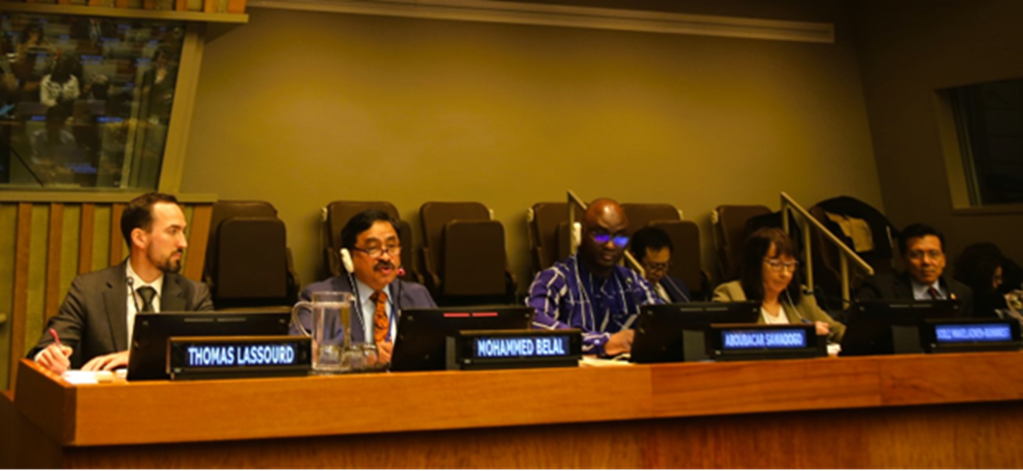
The session was presided over by H.E Mr Lok Bahadur Thapa, President of ECOSOC, with moderation by H.E Mr Gunther Beger, Executive Director of the United Nations Industrial Development Organization (UNIDO). The panel brought together distinguished speakers including Mr.Soili Mäkeläinen-Buhanist, Wendbenedo Jean Marie Kebre and Thomas Lassourd including Ambassador Sheikh Mohammed Belal. Lead discussants Michael Franczak and Tetteh Hormeku enriched the dialogue, offering critical perspectives from policy research and civil society, and reinforcing the importance of coordinated, inclusive approaches to financing for development.
For media inquiries, please contact:
[CFC Media Relations Team]
[Email: managing.director@common-fund.org]
[Phone: +31 20 575 4949]