CFC and Cameroon’s SME Minister Discuss Financing to Support Enterprise Growth and Commodity Transformation
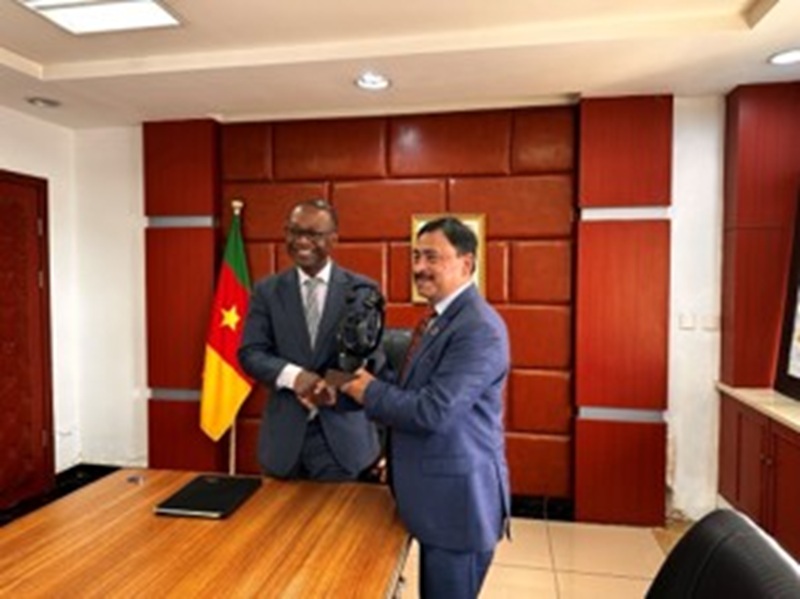
Yaoundé, 5 October 2026 – Amb. Sheikh Mohammed Belal, Managing Director of the Common Fund for Commodities (CFC), met with H.E. Achille Bassilekin III, Cameroon’s Minister of Small and Medium-Sized Enterprises, Social Economy and Handicrafts, to discuss opportunities to expand financing and technical assistance for small and medium-sized enterprises (SMEs) and support the transformation of Cameroon’s commodity sectors.
The meeting focused on the role of SMEs in creating jobs, strengthening local production and processing, and generating greater value from the country’s agricultural and natural resources. Discussions also covered the CFC’s financing instruments, the importance of preparing investment-ready projects, and opportunities to develop a Cameroon Transformation Facility to respond to the financing needs of local enterprises.
Supporting SMEs to move from potential to investment
SMEs are essential to Cameroon’s economic transformation. They connect producers to markets, provide employment, support local supply chains and create opportunities for value addition. Yet many enterprises face difficulties accessing the financing, technical expertise and business support needed to expand their operations, improve productivity and reach new markets.
For commodity-based businesses in particular, the ability to invest in equipment, processing facilities, storage, quality improvements and market development can determine whether they remain focused on primary production or move towards higher-value activities.
The CFC’s approach combines investment with technical assistance to help viable commodity-based enterprises strengthen their operations and develop their commercial potential. Depending on the project and its requirements, the Fund can also consider appropriate risk-sharing arrangements to address barriers to investment.
The meeting provided an opportunity to discuss how these instruments could complement Cameroon’s efforts to support entrepreneurship, strengthen SMEs and encourage more local processing across commodity value chains.
Improving access to CFC financing
An important part of the exchange concerned how Cameroonian enterprises and organisations can access CFC support. Beyond identifying financing needs, prospective applicants must understand the Fund’s eligibility requirements, develop sound business plans and demonstrate the commercial viability and expected development impact of their projects.
The CFC’s investment approach focuses on projects that can contribute to sustainable economic activity while delivering tangible benefits for producers, workers and communities. Technical assistance can help address specific business or operational constraints and, where appropriate, support enterprises in becoming better prepared for investment.
By improving awareness of the available instruments and requirements, engagement with government institutions and business-support organisations can help enterprises better navigate the process and identify suitable opportunities for CFC financing.
The Graduation Fund and a Cameroon Transformation Facility
The meeting also addressed the potential relevance of the CFC’s Graduation Fund, which supports eligible enterprises in overcoming constraints that limit their growth and readiness for investment. Technical and business support can play an important role in helping enterprises strengthen their management, operations and commercial prospects as they prepare for larger financing opportunities.
In this context, the discussions explored the idea of a Cameroon Transformation Facility as a possible mechanism to channel support towards SMEs and businesses involved in commodity transformation. Such a facility could be explored as a way to address financing and technical assistance needs across different stages of enterprise development, including processing, value addition and market access.
Further work would be needed to define the facility’s structure, objectives, eligible beneficiaries, financing arrangements and potential partners. The discussion nevertheless reflected a shared interest in considering approaches that respond to the specific needs of Cameroonian businesses while connecting national priorities with appropriate investment instruments.
Humanizing the value chains
The meeting formed part of the CFC’s wider working visit to Cameroon, which included engagements with government ministries, public institutions, private-sector organisations, financial institutions and civil society representatives.
These discussions reflected the importance of looking beyond commodities themselves to the enterprises and people who make value chains function. Farmers, processors, traders, artisans and other small businesses all contribute to the journey from production to market, but their ability to benefit depends in part on access to capital, skills, infrastructure and commercial opportunities.
The meeting with Minister Bassilekin III provided an opportunity to continue dialogue on how CFC financing and technical assistance could support these ambitions and how future cooperation might help Cameroonian enterprises translate their potential into sustainable growth.