CFC and Asian partners unite around grassroots commodity transformation
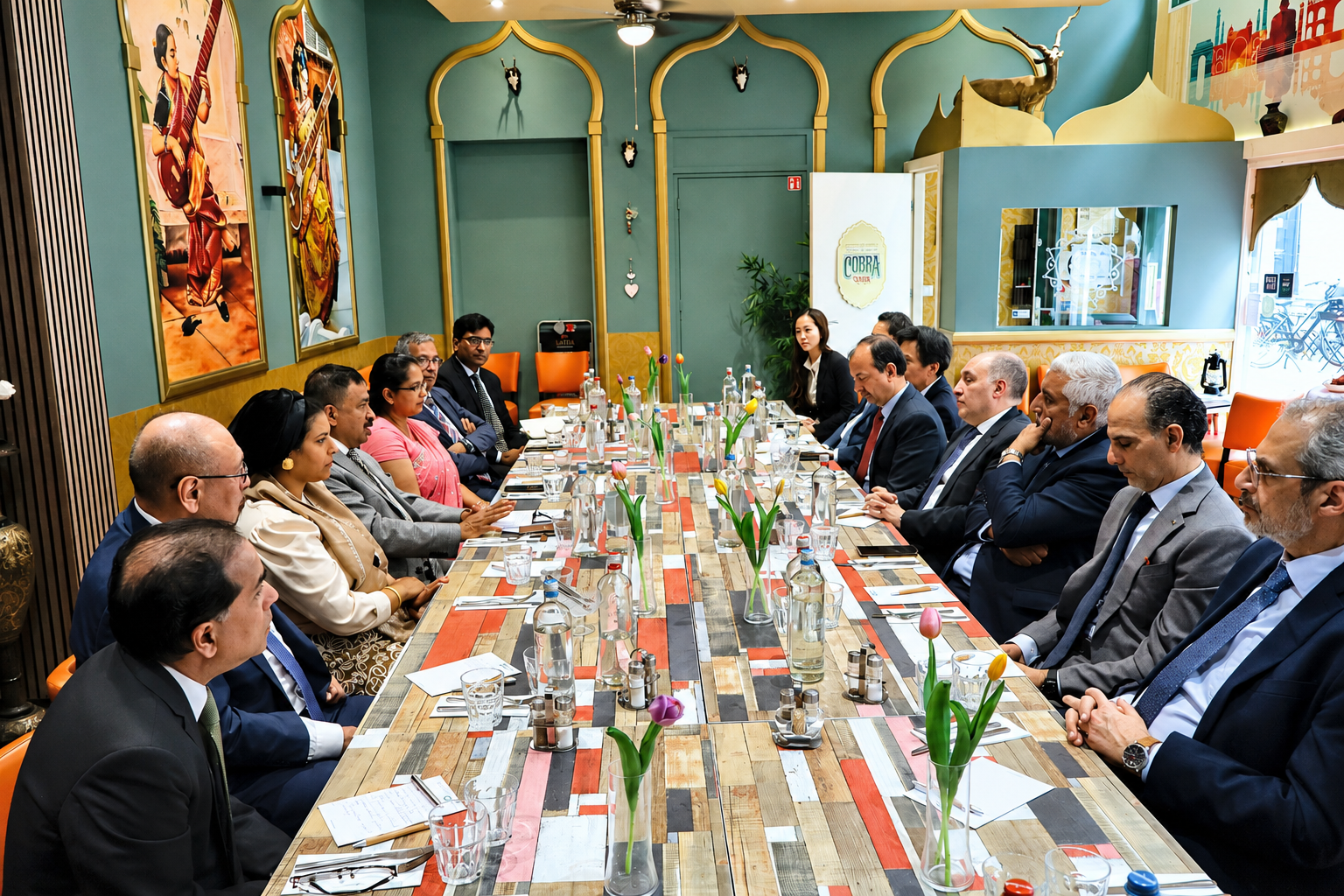
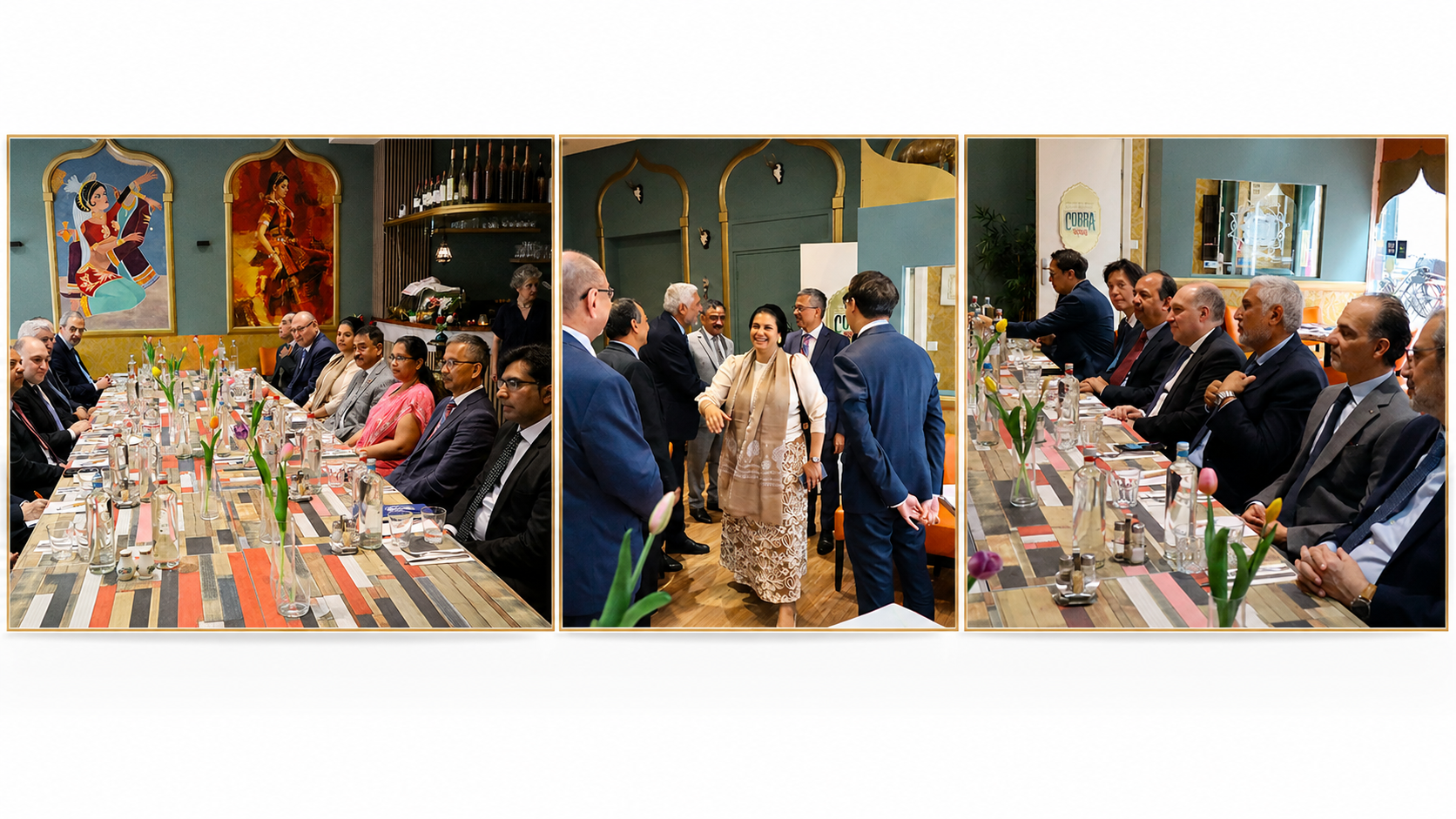
The Hague, 26 August 2026 — The Common Fund for Commodities (CFC) brought together Ambassadors, Heads of Mission and other representatives of Asian countries in The Hague for a focused exchange on a question at the heart of development: how can finance reach the people and communities too often left behind by global value chains?
Held over a luncheon, the event was attended by H.E. Ms. Rekha Gunasekera, Ambassador of Sri Lanka; H.E. Ms. Sahar Ghanem, Ambassador of Yemen and Dean of the Diplomatic Corps; H.E. Mr. Mohammad Asif Rahimi, Ambassador of Afghanistan; H.E. Mr. Faiyaz Murshid Kazi, Ambassador of Bangladesh; H.E. Mr. Kumar Tuhin, Ambassador of India; H.E. Mr. Laurentius Amrih Jinangkung, Ambassador of Indonesia; H.E. Mr. Rokuichiro Michii, Ambassador of Japan; H.E. Mr. Akan Rakhmetullin, Ambassador of Kazakhstan; H.E. Mr. Walid Minkara, Ambassador of Lebanon; Mr. Ammar M.B. Hijazi, Head of the Palestinian Mission; H.E. Mr. Mohammad Katoub, Permanent Representative of Syria to the OPCW; H.E. Mr. Asi Mamanee, Ambassador of Thailand; and Mr. Jamal Nasir, Deputy Chief of Mission of Pakistan.
Held ahead of the CFC’s 82nd Executive Board meeting on 16 September 2026 at Hotel Casa Amsterdam, its virtual preparatory meeting on 14 September, and the CFC’s anniversary gathering hosted by the Embassy of the Philippines on 17 September, the luncheon demonstrated the value of purposeful, low-cost diplomacy.
The gathering included representatives of both CFC Member States and countries that have yet to join the Fund. Participants examined how the CFC’s proven bottom-up model can reactivate rural economies: financing small and medium-sized enterprises close to production so they can provide smallholders with reliable markets, inputs, logistics, processing capacity and access to higher-value domestic and international markets.
“The strength of the CFC is its ability to work close to the ground,” said Ambassador Sheikh Mohammed Belal, Managing Director of the CFC. “By fortifying rural SMEs, we strengthen the bridge between smallholders and markets. Farmers can then earn more than would otherwise be possible, while a greater share of value remains in the communities where commodities originate.”
The Managing Director illustrated the scale of the opportunity through data presented at the luncheon. Across key commodities produced by smallholders, much of the market value is created after the raw product leaves the farm; an estimated 70 per cent is captured in secondary processing. CFC finance therefore targets the “missing middle” of the value chain—SMEs engaged in buying, logistics, inputs, storage, processing, quality improvement, marketing and distribution—using instruments such as working-capital finance, capital-expenditure loans, trade finance and quasi-equity.
Goldtree in Sierra Leone offered a practical example. CFC investment helped the organic palm-oil company expand its operations and sourcing from smallholder outgrowers, increasing opportunities for local producers to earn income from their crop. Goldtree has also invested substantially in local roads and bridges, enabling farmers to transport palm kernels and other necessities to the factory and improving connections within surrounding communities. The case showed that financing a locally rooted enterprise can build not only a value chain, but also the infrastructure and economic ecosystem on which rural life depends.
H.E. Ms. Sahar Ghanem, Ambassador of Yemen and Dean of the Diplomatic Corps in the Netherlands, drew attention to the potential of investment in Yemen’s speciality-coffee sector. Participants discussed how responsible investment in a high-value heritage commodity—even in conflict-affected areas—could restore livelihoods, create market connections and bring much-needed hope to communities.
The discussion also highlighted the potential of saffron in Afghanistan as a high-value alternative to illicit poppy cultivation. By creating legitimate and more rewarding livelihood opportunities—particularly for rural women involved in harvesting and processing—saffron can generate income for marginalized communities while helping restore dignity and economic purpose. In a country deeply affected by conflict, the CFC is working to implement this project not only as an investment in a valuable spice, but also as an investment in hope for communities too often surrounded by uncertainty and despair.
A similar approach is envisaged for Syria, where landmine clearance could release significant areas of fertile land for safe cultivation. The CFC is also exploring technical assistance and other forms of support to help local people return to their agrarian livelihoods, rebuild productive value chains and reconnect with markets. Together, these initiatives demonstrate that commodity investment in fragile and conflict-affected countries can do far more than increase incomes: it can help communities reclaim their land, restore their livelihoods and regain confidence in the future.
H.E. Ms. Rekha Gunasekera, Ambassador of Sri Lanka and Chair of the Asian and Pacific Group, offered guidance on strengthening regional engagement and mobilizing more resources for projects in Asia. Ambassador Belal welcomed her leadership while emphasizing that Asia’s relationship with the CFC should be one of partnership, not simply receipt of financing.
“Asia has much to contribute to the CFC,” he said. “This is the region that helped make the Green Revolution possible and that continues to generate knowledge, technology, capital and enterprise. We invite Asian countries not only to seek support from the Fund, but also to invest in it, share their experience and help extend proven solutions to other commodity-dependent regions.”
The Managing Director also highlighted the CFC’s transformation under CFC 2.0 and resources mobilized with partners including the UK Foreign, Commonwealth & Development Office, Germany and Invest International. Such partnerships complement the scale of larger international financial institutions by enabling the CFC to operate with agility, reach smaller transactions and connect global finance to enterprises embedded in rural communities.
The exchange reflected the international commitment made in the Sevilla outcome document on Financing for Development. Paragraph 46(d) invites countries to increase voluntary contributions to the CFC so it can scale up support to developing countries—especially least developed countries—for projects that promote value addition, particularly in agriculture, and expansion into processing and manufacturing.
The luncheon concluded with a call to deepen cooperation with existing Member States, welcome new members, and mobilize additional capital and knowledge for the CFC’s Humanizing the Value Chains approach. The central message was clear: by directing finance to rural SMEs and smallholders—those too often overlooked by conventional financing—the CFC offers one of the most practical pathways for rebuilding livelihoods, restoring hope and strengthening the foundations of peaceful and resilient communities. When finance reaches the grassroots, it does more than grow enterprises and raise incomes; it enables communities to reclaim their future.